
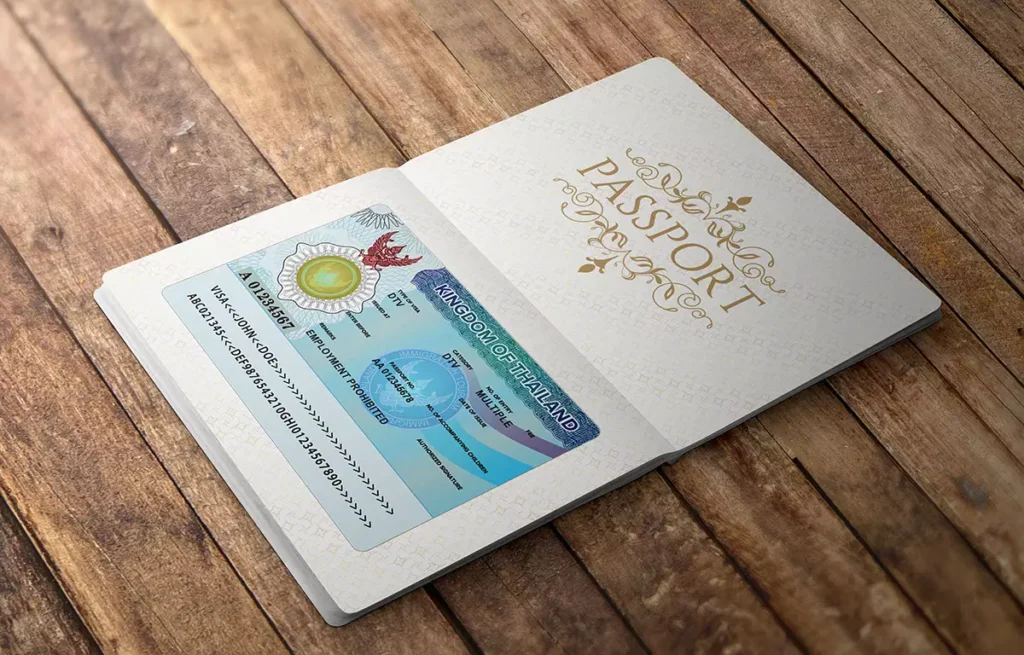
Destination Thailand Visa. Thailand has long been one of the most attractive destinations in Asia for tourists, digital nomads, retirees, and long-term travelers. In response to evolving global work patterns and the growing number of foreign nationals seeking extended stays, Thailand has introduced immigration pathways designed to accommodate individuals who wish to remain in the Kingdom for longer periods while maintaining foreign-based income sources.
One of the most discussed developments in Thai immigration policy is the Destination Thailand Visa (DTV). The DTV is designed to support foreigners who wish to stay in Thailand for extended periods for lifestyle purposes, cultural engagement, and certain approved activities, while maintaining lawful immigration status without relying on repeated tourist visa renewals or border runs.
However, as with all Thai immigration options, eligibility and compliance are highly regulated. The DTV may offer flexibility, but it does not automatically grant unrestricted work rights, and applicants must understand the legal boundaries governing income generation, business activity, and permissible stay conditions.
This article provides a detailed guide to the Destination Thailand Visa, including its legal context, intended purpose, eligibility standards, application process, conditions of stay, compliance risks, and practical strategies for maintaining lawful status.
Legal Context and Government Authorities
Thailand’s visa system is administered through two primary authorities:
- Ministry of Foreign Affairs Thailand, which issues visas through Thai embassies and consulates abroad
- Thai Immigration Bureau, which grants entry permission, regulates stay extensions, and enforces immigration compliance within Thailand
Employment authorization remains regulated separately under Thai labor law through the Department of Employment Thailand, under the Ministry of Labour.
This separation is important because visa issuance does not automatically authorize employment. Even under long-stay visa categories, foreigners must remain compliant with Thai employment restrictions.
What Is the Destination Thailand Visa (DTV)?
The Destination Thailand Visa (DTV) is a long-stay visa category intended for foreigners who wish to remain in Thailand for extended periods while engaging in approved activities, such as:
- long-term tourism and lifestyle stays
- cultural programs and learning activities
- participation in Thai soft power activities (such as Muay Thai training, cooking courses, wellness programs, and cultural immersion)
- remote work or lifestyle-based residence supported by foreign income sources (subject to legal limitations)
The DTV is often associated with the concept of “digital nomad” or “workcation” residency, although Thailand continues to maintain strict rules on what constitutes work within Thai territory.
Key Characteristics and Stay Structure
While visa policies may evolve depending on government announcements, the DTV is generally structured as a long-term visa that provides extended lawful stay without the constant renewal cycle associated with tourist visas.
The DTV typically provides:
- longer validity than standard tourist visas
- permission to stay in Thailand for extended periods per entry
- the ability to remain legally in Thailand for lifestyle purposes without being tied to employment sponsorship, marriage, or retirement requirements
Unlike the Non-Immigrant B visa, the DTV is not primarily designed for corporate employment or work permit sponsorship.
Who Should Consider the DTV?
The Destination Thailand Visa may be suitable for:
- remote workers earning income from foreign employers
- freelancers working with clients outside Thailand
- travelers pursuing long-term lifestyle residence in Thailand
- individuals joining long-term Thai training programs (Muay Thai, cooking, wellness, language)
- foreigners who want extended stays without business sponsorship requirements
The DTV may appeal particularly to individuals who do not qualify for retirement visas, marriage visas, or business visa sponsorship.
Eligibility Requirements
Eligibility requirements for the DTV are designed to ensure that applicants can support themselves financially and will not become dependent on Thailand’s economic system.
Although specific requirements may vary based on embassy implementation, typical eligibility expectations include:
1. Valid Passport
Applicants must hold a passport with sufficient validity, commonly at least six months.
2. Proof of Financial Stability
Applicants are generally required to provide evidence of financial capacity. This may include:
- bank statements
- proof of savings
- evidence of stable foreign income
- employment verification documents
Thailand’s immigration policy emphasizes financial sufficiency to ensure that DTV holders can support themselves without unauthorized employment.
3. Evidence of Intended Activity
Applicants may need to show evidence supporting their intended purpose, such as:
- enrollment confirmation in an approved program (Muay Thai camp, cooking school, Thai language program, wellness retreat)
- proof of remote employment or freelance work abroad
- travel and accommodation plans
Applicants should ensure their stated purpose is consistent with supporting documentation.
4. Clean Immigration and Criminal History
Applicants with prior Thai overstays, deportation history, or serious criminal records may face refusal.
Thai immigration authorities place significant weight on prior compliance.
Application Process
Step 1: Confirm Embassy Requirements
Since visa implementation is processed through Thai embassies and consulates, applicants should confirm:
- eligibility criteria in their jurisdiction
- financial thresholds
- documentary format requirements
- appointment and submission procedures
Step 2: Prepare Documentation
Applicants typically prepare:
- visa application form
- passport photos
- passport copy and travel history
- financial evidence (bank statements, income documents)
- supporting documents for intended activity
- proof of accommodation or itinerary (if required)
Step 3: Submit Application Abroad
Most DTV applications must be filed outside Thailand through a Thai embassy or consulate. Applicants should plan for processing time and ensure travel schedules accommodate the visa issuance period.
Step 4: Receive Visa and Enter Thailand
Once approved, the visa holder enters Thailand and receives a permitted stay stamp from Immigration.
The stay stamp controls the actual length of stay per entry, which may differ depending on policy.
Compliance Obligations While in Thailand
1. Immigration Reporting
Foreigners staying long-term may be required to comply with reporting obligations such as:
- 90-day reporting (TM.47), if applicable
- TM.30 residence reporting by the property owner or hotel
Failure to comply may lead to fines or complications in future immigration applications.
2. Re-Entry Rules
Some visa types require re-entry permits when leaving Thailand. Depending on DTV structure, holders should confirm whether leaving Thailand affects their visa status.
3. Avoiding Unauthorized Employment
A key compliance risk is misunderstanding Thailand’s work permit rules.
Even if a DTV is marketed as supporting “remote work,” Thailand’s legal interpretation of work remains broad. Activities that involve providing services within Thailand or generating Thailand-sourced income may trigger work permit requirements.
Foreigners should avoid:
- working for Thai companies
- providing services to Thai customers
- operating a business in Thailand without authorization
- engaging in employment that competes with Thai workers
If income is earned abroad and work is performed digitally, the legal position may still depend on enforcement interpretation. Risk management requires careful legal assessment.
DTV vs. Other Thai Long-Stay Options
DTV vs. Tourist Visa
A tourist visa is shorter-term and may require extensions or repeated re-entry. The DTV is designed to reduce reliance on visa runs.
DTV vs. Education Visa
An education visa requires enrollment in a qualified educational institution and ongoing attendance requirements. The DTV may offer broader flexibility depending on permitted activities.
DTV vs. Non-Immigrant B Visa
The Non-Immigrant B visa is tied to business sponsorship and work permit eligibility. The DTV is more lifestyle-based and may not be suitable for formal employment.
DTV vs. Retirement Visa
Retirement visas require age and financial thresholds. The DTV may be an alternative for younger long-stay foreigners.
Common Reasons for Visa Refusal or Entry Issues
Applicants may face refusal if:
- financial evidence is insufficient or inconsistent
- the intended activity appears unclear or unsupported
- the applicant has prior overstays or visa abuse history
- supporting documents do not match stated purpose
- the applicant cannot demonstrate strong ties or lawful travel intent
Immigration officers at entry points also have discretion to deny entry if they believe the visa is being misused.
Strategic Recommendations for DTV Holders
To maintain lawful status, applicants should:
- keep strong financial documentation available
- maintain evidence of foreign employment or program enrollment
- avoid repeated border exits that resemble long-term residence abuse
- comply strictly with reporting obligations
- avoid Thai-source employment without work permit authorization
- consult legal professionals if engaging in freelance or remote work activities
Proper planning is essential, particularly for individuals intending to remain in Thailand for long periods.
Conclusion
The Destination Thailand Visa (DTV) represents a significant development in Thailand’s long-stay immigration landscape. It is designed to accommodate foreigners who wish to live in Thailand for extended periods for lifestyle, cultural, wellness, or remote work-related purposes without requiring employer sponsorship or retirement eligibility.
However, the DTV should not be misunderstood as a work visa. Thailand continues to enforce strict labor regulations, and visa holders must remain cautious about activities that may be considered employment under Thai law. Applicants must also meet financial sufficiency standards and maintain immigration compliance through reporting and lawful stay management.
For long-stay visitors who want a structured and legally supported way to experience Thailand beyond traditional tourist visas, the DTV can be a highly attractive option—provided it is approached with careful documentation, realistic expectations, and full compliance with Thai immigration rules.